




The typical wines of Emilia Romagna represent a unique heritage that combines famous varieties like Sangiovese and Lambrusco with the excellence of Albana di Romagna DOCG, the first white grape in Italy to receive the Controlled and Guaranteed Designation of Origin in 1987. This region, the heart of the Food Valley, offers structured whites and elegant reds capable of balancing the richness of Bolognese cuisine, transforming every meal into an authentic cultural experience.
In this guide, we will explore the technical characteristics of Albana, the secrets of pairings with traditional handmade pasta (sfoglia), and how to enjoy a direct vineyard wine tasting experience at the historic estates of Castel San Pietro Terme.
Typical wines of Emilia Romagna: a heritage between land and sea
Emilia-Romagna viticulture is distinguished by extraordinary biodiversity, the result of a geological conformation that ranges from the clayey gullies of the Apennines to the sands of the Po delta. While Emilia is the undisputed home of Lambrusco’s bubbles and the aromatic whites of the Colli Piacentini, Romagna builds its identity on two pillars: Sangiovese di Romagna and Albana DOCG.
Sangiovese and Albana: the pillars of Romagnolo viticulture
While Sangiovese embodies the strength and longevity of regional reds, Albana represents the white soul of the territory. It is a versatile native grape variety, capable of expressing itself in different versions: dry, semi-sweet (amabile), sweet, and passito. The dry version, in particular, has gained the attention of international sommeliers for its aging potential and its almost “red-like” structure, while maintaining the typical freshness of a great white.
Albana di Romagna DOCG: Italy’s first white grape
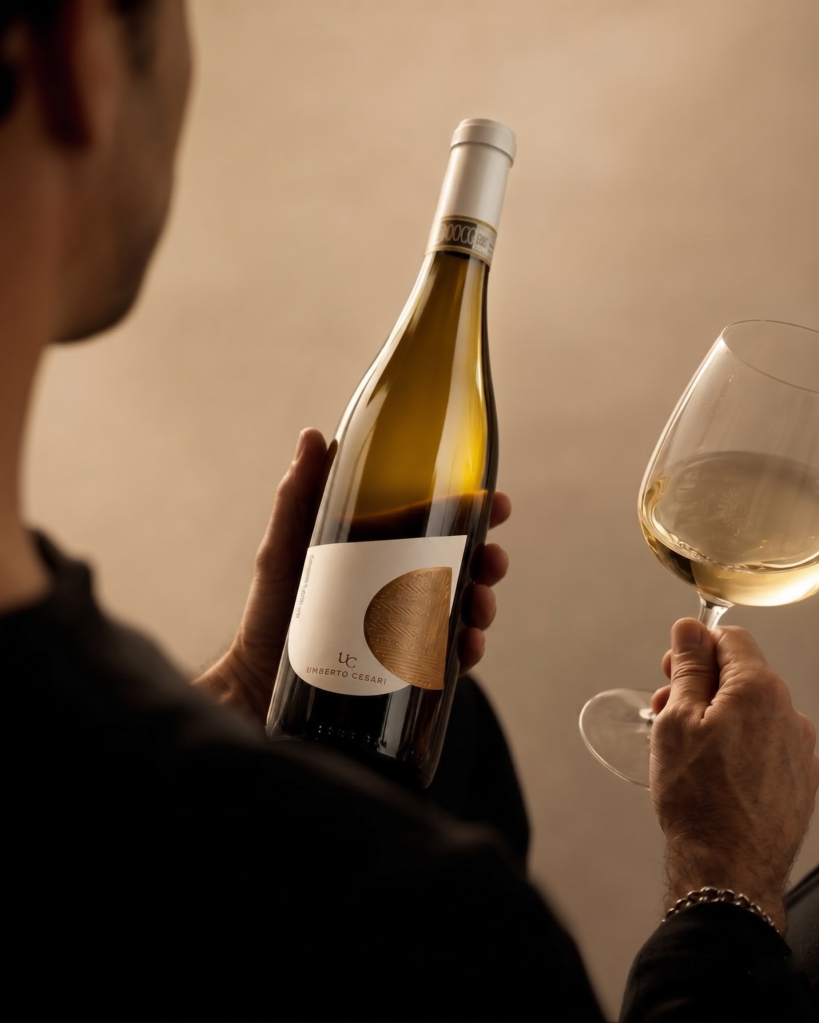
Albana di Romagna DOCG is no common white wine. Its peculiarity lies in its richness of polyphenols and tannins, rarely found in other white grape varieties. This gives the wine a decisive personality, an intense golden-yellow color, and an olfactory profile that ranges from acacia flowers to ripe apricot, up to honeyed notes in the passito versions.
Organoleptic characteristics: structure and acidity
A quality Albana is recognized by its acidic backbone, which supports an important muscular structure. On the palate, dry Albana presents itself as warm and savory, with a slightly almond-like finish. These characteristics derive from clayey soils and meticulous agronomic management, such as that practiced by Umberto Cesari, where the selection of grapes and precision winemaking allow for the exaltation of the varietal’s typicity.
The perfect pairing: Albana and Bolognese sfoglia
Many enthusiasts seek the perfect white to accompany the iconic dishes of Emilian cuisine. The main challenge is finding a wine that is not overwhelmed by the fatness and aromatic complexity of ingredients such as Parmigiano Reggiano, prosciutto crudo, or the filling of tortellini.
Why Umberto Cesari Albana enhances tortellini and lasagne
The Albana di Romagna from Umberto Cesari resolves this gastronomic dilemma thanks to a millimeter-precise balance between freshness and body. Its natural acidity acts as a “cleanser” for the palate, refreshing it after a bite of lasagne alla bolognese or tortellini in parmigiano cream. The structure of the wine holds its own against the ragù and the egg pasta (sfoglia), offering a persistence that prolongs the pleasure of the meal.
- Tortellini in brodo: Dry Albana enhances the savoriness of the filling without masking the delicacy of the capon broth.
- Green Lasagne: The vegetal component and the fatness of the béchamel find an ideal partner in Albana, which balances the softness of the dish.
- Cold cuts platter: The savoriness of the wine perfectly contrasts the sweetness of the fat in mortadella or prosciutto.
Vineyard wine tasting: living the Umberto Cesari experience
To fully understand the link between wine and territory, there is no better way than a vineyard wine tasting in the heart of Romagna. Just 15 minutes from Bologna, the hills of Castel San Pietro Terme host the 12 estates of the Umberto Cesari family, an area where winemaking tradition since 1964 meets technological innovation.
Sustainability and technological innovation in the glass
Choosing an Umberto Cesari Albana also means supporting responsible viticulture. The winery adopts certified sustainable agriculture practices, using weather stations and vigor maps to minimize human and water intervention. In the cellar, the use of advanced technologies such as Galileo spherical concrete tanks and cocciopesto amphorae allows for the refinement of Albana while preserving its aromatic integrity and the purity of the terroir.
During a visit to the company, it is possible to explore the aging cellar and participate in sensory journeys guided by professional sommeliers. These experiences allow you to touch firsthand how soil care (through the use of mycorrhizae and vermicompost) translates directly into the quality and longevity of the wine found in the glass.
Tips for purchase and storage
When choosing an Albana di Romagna DOCG, it is important to consider the vintage and the type. If you are looking for a wine for the whole meal, the dry version is the most suitable. For traditional desserts or blue cheeses, Albana Passito represents absolute excellence, often awarded the highest accolades by industry guides.
To fully enjoy its nuances, serve dry Albana at a temperature of about 10-12°C in medium-width glasses, which allow for the oxygenation necessary to release its complex bouquet.
Discover the authenticity of Romagnolo wines
Emilia Romagna is a land that welcomes with generosity, and its wines are the mirror of this hospitality. Whether it is a home-cooked dinner based on handmade sfoglia or a tour among the golden rows of Albana, the goal is the same: to celebrate the quality and identity of a timeless territory.
If you wish to deepen your knowledge of Albana or book an exclusive experience at our estates, we invite you to explore the selection of Umberto Cesari wines, where every bottle tells a story of passion, sustainability, and love for Romagna.