




For an authentic pairing with Bolognese cuisine, the choice falls on three symbol grape varieties of Emilia Romagna: Sangiovese for rich meat-based dishes like tagliatelle al ragù, Pignoletto for the opening with tigelle and cold cuts, and Albana for its versatility ranging from first courses in broth to desserts. Selecting the right wine means balancing the richness and sapidity of the dishes of “Grassa” (the Fat) Bologna with the acidity and structure of labels that have their roots in the territory between Imola and the Bolognese hills.
Bologna is not just a city; it is a sensory experience where food claims a leading role. But what makes a pairing truly successful? It is not just about color, but a dance between the persistence of flavor and the wine’s ability to cleanse the palate. In this guide, we will explore how the wines of Umberto Cesari, guardian of the regional winemaking tradition since 1964, can elevate your table.
Sangiovese: the king of reds for ragù and meats
When thinking of Bolognese cuisine, the immediate image is a plate of steaming tagliatelle seasoned with a slow-cooked ragù. This is where Sangiovese comes in, the red grape variety that represents the soul of Romagna.
Sangiovese is characterized by a marked acidity and tannins that, if well-crafted, can be velvety yet firm. This structure is essential to contrast the fatty component of the meat and butter, omnipresent elements in local recipes. A full-bodied Sangiovese, like those produced in the historic estates of Castel San Pietro Terme, offers notes of marasca cherry and undergrowth that perfectly complement the aromatic complexity of a Lasagna alla Bolognese.
Which Umberto Cesari Sangiovese is most suitable?
- Ca’ Grande: Convivial and immediate. Fruity and pleasant, perfect for an informal and authentic table.
- Laurento: Refined and vertical. Ideal for a more delicate and less concentrated ragù. Freshness and tannins give momentum to the dish with a finer style.
- Tauleto: Great structure and body to match the richness and opulence of the dishes.
Pignoletto: freshness and bubbles for the Emilian appetizer
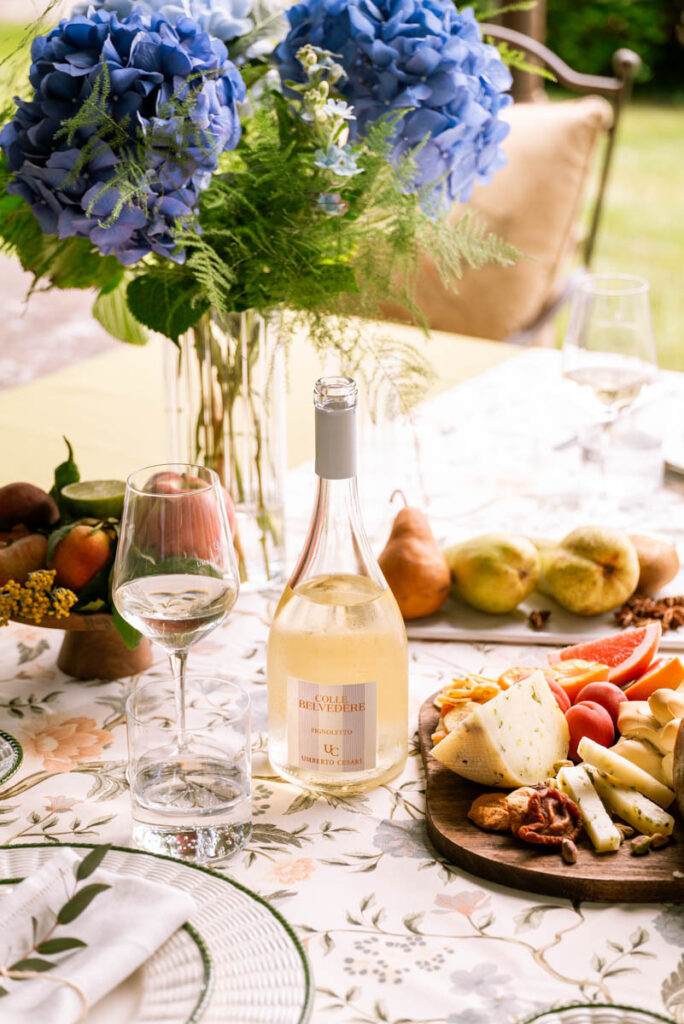
No meal in Bologna begins without fried crescentine and tigelle as protagonists, accompanied by a tray of mortadella, prosciutto crudo, and squacquerone. The chosen companion for this ritual is undoubtedly Pignoletto.
The Colle Belvedere Pignoletto Frizzante is a wine that makes liveliness its strength. The fine bubbles and marked freshness perform a fundamental palate-cleansing function when consuming fried foods or rich cold cuts. On the nose, it releases floral scents of hawthorn and fruity notes of green apple and pear, which invite the next sip.
When to choose Pignoletto?
- Traditional aperitif: perfect with small bites of Parmigiano Reggiano.
- Crescentine and tigelle: its acidity “cuts” through the fatness of the cold cuts.
- Light first courses: excellent with ricotta and sage tortelloni.
Albana di Romagna: the versatile queen between broth and dessert
Albana holds an important record: it was the first white grape in Italy to obtain DOCG certification in 1987. It is an eclectic grape variety that can be vinified in dry, sparkling, or passito versions, offering different solutions for every moment of the meal.
In its dry version, Albana di Romagna is distinguished by a structure unusual for a white, almost “red-like,” thanks to a light tannic presence. This makes it ideal for dishes that would usually challenge thinner whites, such as tortellini in capon broth or stewed white meats.
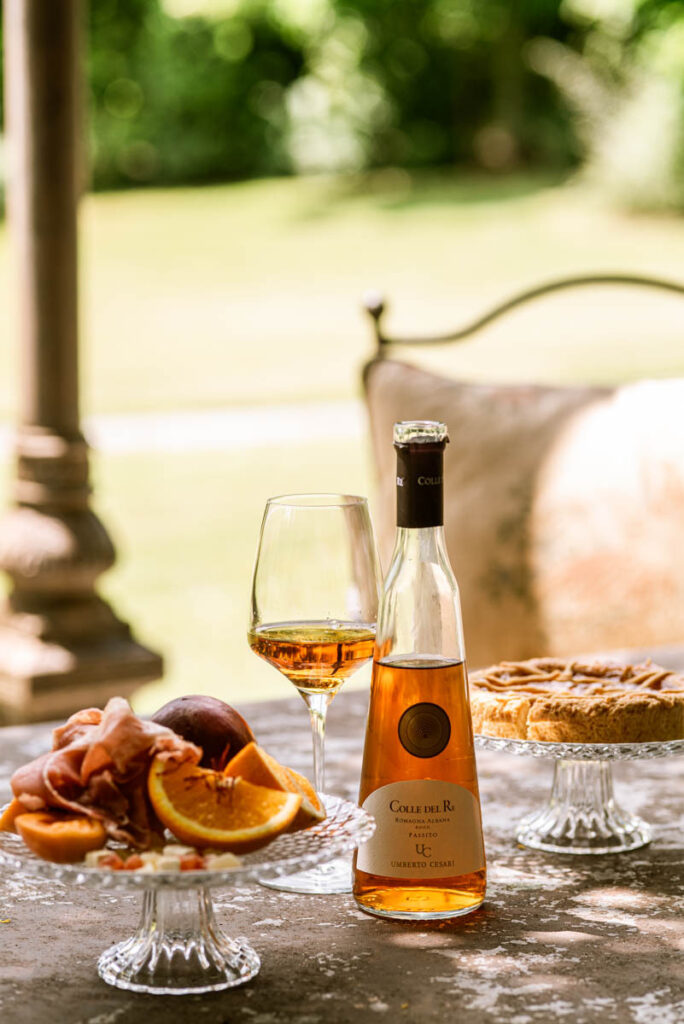
However, it is in the passito version that Albana reaches peaks of absolute excellence. The Colle del Re Passito is the ideal crowning achievement of a Bolognese dinner. With its amber color and hints of dried apricot, honey, and spices, it pairs divinely with local dry pastries (such as zuccherine) or with blue and aged cheeses like Formaggio di Fossa di Sogliano.
Quick guide to pairings: a summary table
To help you navigate the labels during your next dinner, here is a practical scheme based on the excellence of the territory:
| Bolognese Dish | Recommended Wine | Typology | Pairing Characteristic |
|---|---|---|---|
| Crescentine and Cold Cuts | Pignoletto | Sparkling | The bubbles cleanse the palate from the fat of the fried food. |
| Tagliatelle al Ragù | Sangiovese | Still Red | The tannins balance the structure of the meat. |
| Tortellini in Broth | Dry Albana | Structured White | The body of the wine holds up to the sapidity of the broth. |
| Aged Cheeses | Albana Passito | Dessert Wine | Perfect contrast between sapidity and honeyed sweetness. |
| Mixed Boiled Meat | Sangiovese Riserva | Evolved Red | The complexity of the wine accompanies the different textures of the meats. |
Sustainability and innovation: why the producer’s choice matters
Choosing a wine for an authentic pairing does not only mean looking at the grape variety, but also at the production philosophy. The area of the Bolognese Hills and the Imola hills is experiencing a rebirth thanks to entities like Umberto Cesari, who have been able to combine tradition with certified sustainability.
The adoption of integrated agriculture practices (SQNPI certification) and the use of cutting-edge technologies—such as weather stations in the vineyard and optical berry selection—allow for “pure” wines that are the direct expression of the soil. When you purchase a bottle, you are supporting an ecosystem that protects the biodiversity of the Emilia-Romagna hills, ensuring that the Sangiovese or Albana you drink today maintains the same identity for future generations.
Where to buy wines for your Bolognese dinner
If you are near Bologna, a visit to the Umberto Cesari winery in Castel San Pietro Terme is a must to experience an immersive journey among the rows. For those who wish to receive the best of Emilia Romagna directly at home, the Umberto Cesari online shop offers a complete selection, from the fresh bubbles of Pignoletto to the historic reserves of Sangiovese, with fast and secure shipping.
There is no better way to honor Bolognese cuisine than serving a wine born from the same land. Whether for a Sunday lunch or a gourmet dinner, Sangiovese, Pignoletto, and Albana remain the three essential pillars for every enthusiast of good drinking.
Frequently Asked Questions about Emilia-Romagna wine (FAQ)
The best wines for an authentic experience are Sangiovese, ideal for first courses with ragù, Albana di Romagna DOCG, perfect for cheeses and desserts in the passito version, and Pignoletto, the sparkling white of excellence for Bolognese appetizers. Choosing labels from sustainable and precision viticulture guarantees a pure expression of the territory.
Pignoletto Frizzante is the ideal companion for tigelle and crescentine thanks to its acidity and freshness, which balance the richness of local cold cuts and cheeses. Umberto Cesari offers versions that enhance the floral and fruity notes typical of the Bolognese hills, available directly in their online shop for those seeking an authentic product.
The region is famous for Sangiovese, a red of character and structure, and for Albana, which holds the record for being the first white DOCG in Italy. Among the whites, Pignoletto, typical of the Bologna area, also stands out. Umberto Cesari’s production focuses on the valorization of these native grape varieties through certified and innovative agricultural practices.
Albana is an extremely versatile wine. In the dry version, it pairs well with soups in broth and white meats, while Colle del Re Passito is perfect for concluding a meal with dry pastries or with blue and aged cheeses, representing an excellence of the Romagna tradition available in the best wine shops and online.
A few kilometers from Bologna, the hills of Castel San Pietro Terme host the Umberto Cesari winery, where it is possible to discover and purchase wines produced according to principles of integrated sustainability. For those who prefer the convenience of digital, the entire catalog of Sangiovese, Albana, and Pignoletto is available on the official shop with direct shipping.